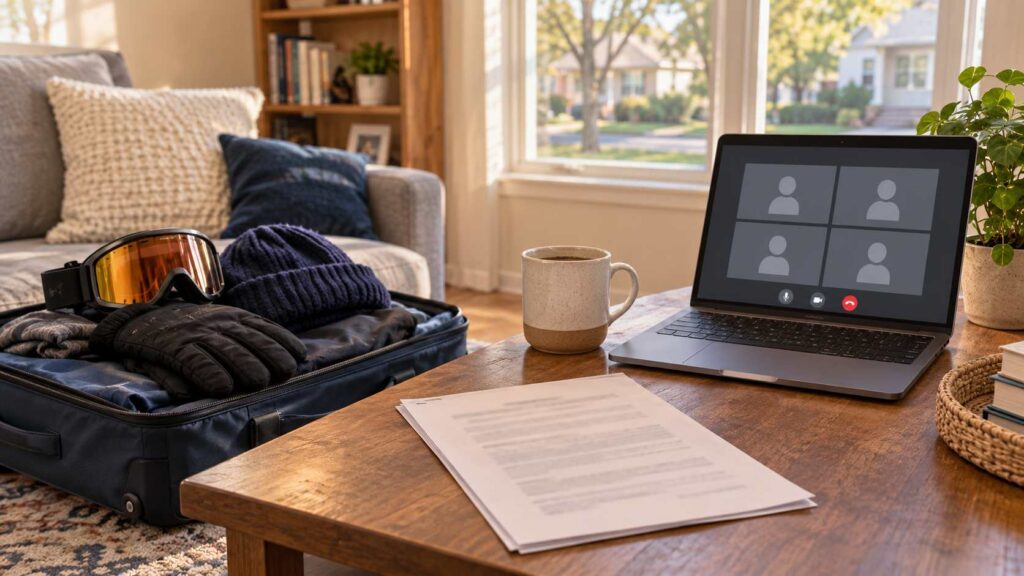
You went home. The Colorado case did not. If you were arrested in Colorado while visiting from out of state, flying home does not end the charge or your obligations to the Colorado court. But that does not necessarily mean you must book a flight back for every hearing.
Depending on what comes next, a lawyer may be able to handle some matters without you, or the court may allow you to participate remotely. Other proceedings may require you to return. The important thing is to find out what your case requires before your next court date, not after you miss it.
At Mark S. Rubinstein, P.C., I help out-of-state clients understand what their Colorado case requires, including when I may be able to appear on their behalf, when remote participation may be available, and when they may need to return to Colorado.
Arrested in Colorado on a Ski Trip? Key Takeaways for Out-of-State Visitors
If you were arrested in Colorado on a ski trip and have since flown home, your case is still open and your obligations to the court still apply. Here is what to know.
- Leaving Colorado does not end the charge. Your court dates, bond, and release conditions still apply after you return to your home state.
- You may not need to return for every hearing. Under Colorado’s simplified county-court procedure for misdemeanors and petty offenses, a defendant served with a summons may appear in person or through a lawyer.
- Remote appearances are possible only with court approval. Colorado allows audio or video participation in nonjury proceedings, but any jury trial requires you to be physically present in Colorado.
- Missing court can lead to a bench warrant, and leaving the state does not cancel it. Extradition is legally possible even for a misdemeanor, although whether Colorado pursues it depends on the circumstances.
- Start with your paperwork: identify the court, the exact charge, your next court date, and your bond conditions so you know what has to happen before that date.
Back Home and Worried About a Case Hundreds of Miles Away?
A trip that was supposed to be about fresh powder and time away has turned into court dates in a state you do not live in. It is a stressful place to be, but you do not have to figure it out from a distance on your own. Mark Rubinstein can review your paperwork, tell you what your case actually requires, and handle the Colorado side so you can keep living your life at home.
Request A Free ConsultationWhat Happens to Your Colorado Case After You Fly Home?
Before deciding whether you need to return to Colorado, start with the paperwork you were given. Identify:
- The court handling your case. Whether the case is in municipal, county, or district court matters. Colorado’s Municipal Court Rules of Procedure govern procedure in the state’s municipal courts, so the rules that apply can depend on where your case is filed.
- The exact charge. The type and seriousness of the charge can affect what happens next.
- Your next court date. Confirm when you are expected to appear and what type of proceeding is scheduled.
- Your summons, bond, and release conditions. Review any requirements you must continue following while the case is pending.
Those details tell you what needs attention first and help determine whether your next step can be handled from home or may require you to return to Colorado.
Do You Have to Go Back to Colorado for Court?
Not necessarily for every proceeding. Whether you have to go back to Colorado for court depends on what comes next in your case and what the court permits.
Can a Lawyer Appear in Court Without You?
In some cases, yes. Colorado’s simplified county-court procedure for misdemeanors and petty offenses provides one clear example: a defendant served with a summons under that procedure may appear in person or by counsel at the time and place stated in the summons.
This can spare an out-of-state defendant an unnecessary trip for that appearance, but the rule is limited to the procedure it governs. Hiring a lawyer does not mean you can stay home for every upcoming court date.
Can You Attend a Colorado Court Hearing Remotely?
In state-court criminal cases, Colorado’s rules of criminal procedure allow a defendant to participate remotely by qualifying audio or video in proceedings that do not involve a jury. To do so, you must obtain court approval beforehand, and for key proceedings, such as a guilty plea, bench trial, sentencing, preliminary hearing, or pretrial motions hearing, the defendant must also explicitly consent to appearing virtually.
A remote appearance carries the same legal weight as being in the courtroom, potentially eliminating the need to travel to Colorado. However, virtual attendance is a formal option granted by the court, not a personal choice you can make on your own.
When Might You Still Have to Return to Colorado?
Criminal procedure rules establish the general requirement that a defendant be physically present at all critical stages of a criminal case, unless an exception applies or remote approval is granted. Because remote participation is restricted to nonjury proceedings, any jury trial will require your physical return to Colorado.
Do not buy a plane ticket solely because a court date appears on your paperwork, but avoid assuming you can remain home just because you hired an attorney. Always confirm the specific attendance requirements for each scheduled proceeding in advance.
How Can a Colorado Criminal Defense Lawyer Handle Your Case While You Are in Your Home State?
Mark S. Rubinstein, P.C., can manage the local case work while you continue your life at home. Specifically, I can:
- Convert your paperwork into a plan. I identify the next required steps and applicable deadlines.
- Manage Colorado proceedings. I enter appearances, communicate with prosecutors, and track all hearing dates.
- Limit unnecessary travel. I request remote participation or attorney-only appearances whenever possible to save you trips back to Colorado.
- Develop your defense. I investigate the facts, evaluate defenses, and negotiate your case while you remain out of state.
That gives you a clear plan for handling the case without unnecessary travel or guesswork.
What Happens If You Miss Court After Returning Home?
Being back in your home state does not excuse a required Colorado court appearance. If you were released on bond, you must appear as directed by the court. Under Colorado’s county-court summons procedure, a bench warrant may be issued if you fail to appear in person or by counsel as permitted.
What Does an Out-of-State Warrant Mean When You Are Back Home?
Leaving Colorado does not cancel an outstanding Colorado warrant. If your court date is still ahead, this is a planning problem: determine how to handle the appearance. If you have already missed your court date, you may face an out-of-state warrant. I can find out whether one was issued and what steps may be available to address it.
Can There Be Extradition for a Misdemeanor?
Yes, potentially. Federal extradition law covers a person charged with “treason, felony, or other crime,” so misdemeanor charges are not categorically excluded. Extradition for a misdemeanor is therefore legally possible, but whether Colorado actually seeks extradition depends on the circumstances and decisions of the officials involved.
For someone arrested on a felony and released on bond, Colorado also requires an extradition waiver as a condition of bond. The waiver applies if the person is arrested in another state while out on that bond.
What Should You Do Once You Are Back Home?
Once you know what your paperwork requires, act before the next court date creates a bigger problem. Determine your next steps based on whether your court date has already passed:
- If the date is still ahead, confirm whether you must return, may participate remotely, or can have counsel handle the appearance;
- If you have already missed court, find out promptly whether the court issued a warrant and what steps may be available to address it; and
- While the case is pending, continue following all bond and release conditions unless the court changes them.
None of these requires you to be in Colorado to start, and each is easier to handle before the court has any reason to treat you as a no-show.
Missed a Court Date or Afraid You Might? Let’s Talk Next Steps.
If you are worried about a warrant, or you are not sure whether you are expected back in Colorado next month, the hardest part is not knowing. One conversation can change that. Mark Rubinstein has more than 30 years of legal experience and works every case himself, so you get straight answers about where things stand and a clear plan for what comes next.
Talk To Mark RubinsteinMark S. Rubinstein P.C. Can Help with Your Colorado Case
If you were arrested in Colorado while visiting from out of state and are now back home, I can help you determine what can be handled remotely and when your presence may be necessary.
As a sole practitioner with more than 30 years of legal experience, I provide attentive representation throughout the course of the case. Contact Mark S. Rubinstein, P.C., for an initial consultation and straightforward guidance about what comes next.
Legal References Used to Inform This Page
To ensure the accuracy and clarity of this page, we referenced official Colorado and federal legal resources:
- Colorado Judicial Branch, Municipal Court Rules of Procedure Committee — explaining that the Colorado Municipal Court Rules of Procedure govern proceedings in Colorado municipal courts.
- Colorado Revised Statutes 2026, Title 16 — including county-court procedure, bond appearance requirements, failure-to-appear provisions, and Colorado extradition procedures.
- Colorado Rule of Criminal Procedure 43, Rule Change 2021-16 — governing defendant-presence requirements and court-approved remote participation in nonjury proceedings.
- Colorado Rule of Criminal Procedure 43, Rule Change 2022-10 — requiring defendant consent for specified remote proceedings, including a trial to the court.
- Colorado Rule of Criminal Procedure 43, Presence of the Defendant — setting out the general proceedings at which a defendant ordinarily must be present.
- 18 U.S.C. § 3182 — federal interstate extradition requirements for a person charged with treason, a felony, or another crime.